

Visitor information
Whether you’re jetting in from abroad, popping in from the Peak District, new to the area or a regular visitor, Stockport is easy to reach. Located just seven minutes from Manchester on the main West Coast rail line, all trains stop at Stockport. The famous 192 bus is a familiar sight on the main north / south arterial A6 and there’s plenty of parking for cars and motor bikes. For those who choose a greener way to travel, there are new cycleways and footpaths.
Find out more here:-
plan your journey
park your car

Our handy map of Stockport town centre includes places for retail, leisure and food as well as historic locations and other attractions.
Stockport heritage
Stockport lies at the point where the rivers Tame and Goyt meet – the source of the river Mersey. In the 16th century was a small town entirely on the south bank of the Mersey, known for the cultivation of hemp and manufacture of rope. In the 18th century, it had one of the first mechanised silk factories in the UK – in 1732 Stockport’s first silk mill (the first water-powered textile mill in the north-west of England) was opened on a bend in the Mersey. Stockport’s predominant industries of the 19th century were the cotton and allied industries. It was also at the centre of the country’s hatting industry, which by 1884 was exporting more than six million hats a year; the last hat works in Stockport closed in 1997.
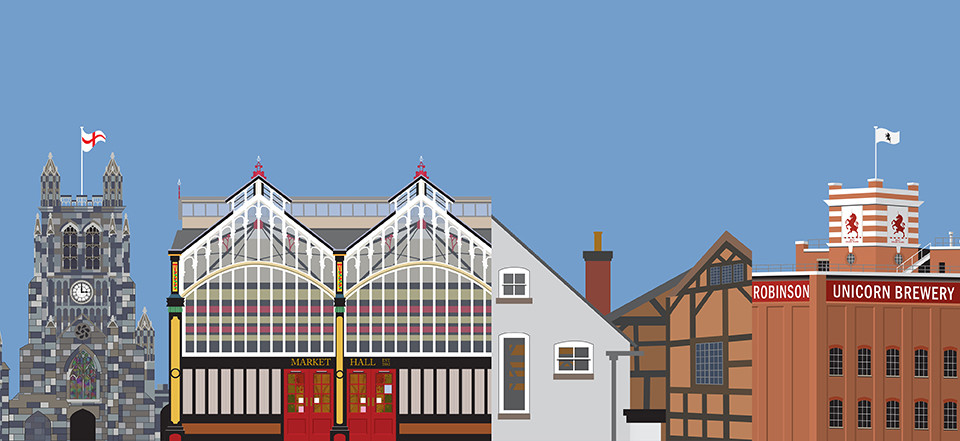
Dating back to 1460, Staircase House in the Market Place is Stockport’s oldest town house. Lovingly restored following a devastating fire in 1995 it is one of Stockport’s 7 museums. The Grade II* listed house is furnished in different period styles from the 1600s to 1940 to illustrate that the house was occupied for over 500 years. It also boasts one of only three surviving Jacobean cage-newel staircases in the country.
Dominating the western approaches to the town is Stockport’s famous viaduct carrying the West Coast Main Line across the valley and the river Mersey. Originally built in 1840, the viaduct is one of the largest brick-built structures in the UK. Finally extended it consists of 11 million bricks forming 27 arches and is over 33 metres high.
Stockport has never been a sea or river port as the Mersey is not navigable here; in the centre of Stockport the river has been culverted and the main shopping street, Merseyway, built above it.
Since the start of the 20th century Stockport has moved away from being a town dependent on cotton and its allied industries to one with a varied base. It makes the most of its varied heritage attractions, including a national museum of hatting, a unique system of second world war air raid tunnel shelters in the town centre, and a late medieval merchants’ house on the 700-year-old Market Place. In 1967, the Stockport air disaster occurred, when a British Midland Airways aeroplane crashed in the Hopes Carr area of the town, resulting in 72 deaths among the passengers and crew.
Discover more
Stockport Viaduct Stockport Air Raid Shelters Staircase House History of Stockport
We welcome your ideas and input. If you are interested Get in touch please email the bid.
Contact Totally Stockport’s BID Office Manager Lisa Noel – lisa.noel@totallystockport.co.uk
Call the Totally Stockport office on 0161 537 9382 or call in to: Suite G1.3, STOK 43-59 Prince’s Street, Stockport SK1 1RY

